Planning Your First Trip to Austria: Destinations, Airports & Itineraries
Published
Planning your first trip to Austria? Discover the best places to visit, when to go, which airport to choose, where to stay and how to plan an unforgettable Austrian adventure.
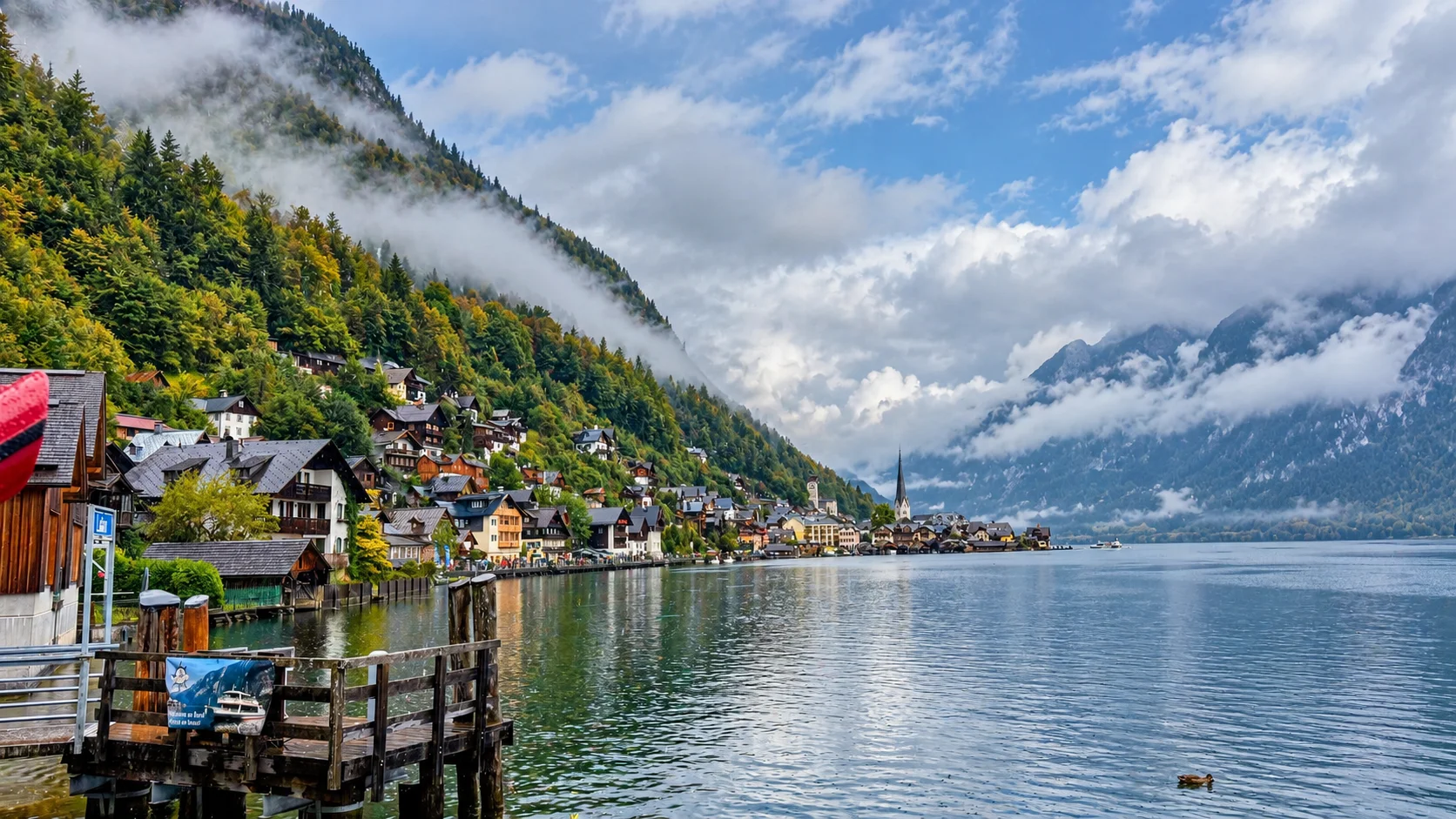
When I first planned a trip to Austria, Vienna was the only destination on my radar. I booked my flights to Vienna Airport, thinking we'd explore the city and perhaps take a day trip. But as I started researching our itinerary, I discovered just how much more Austria had to offer - from fairytale lakeside villages to dramatic Alpine landscapes and charming mountain towns.
And that's when I realised something important: choosing where to fly into can shape your entire Austria trip.
Whether you're dreaming of imperial cities, crystal-clear lakes, mountain adventures or snowy Christmas markets, this guide will help you discover what Austria has to offer and decide where to go, when to visit, how many days you need and which airport makes the most sense for your plans.
1. What Does Austria Have to Offer?
 | 1. Imperial Cities & CultureVienna, Salzburg and Graz Think grand palaces, historic streets, beautiful architecture, traditional coffeehouses, museums and classical music. These cities are ideal for a cultural city break, even if you have only a few days. Best for: city breaks, culture and history. |
 | 2. Fairytale Lakes & VillagesHallstatt, Wolfgangsee and the Salzkammergut Picture turquoise lakes, mountain backdrops, charming villages and scenic boat rides. This is the Austria many travellers imagine when they picture an Alpine escape. Best for: summer holidays, photography and scenic getaways. |
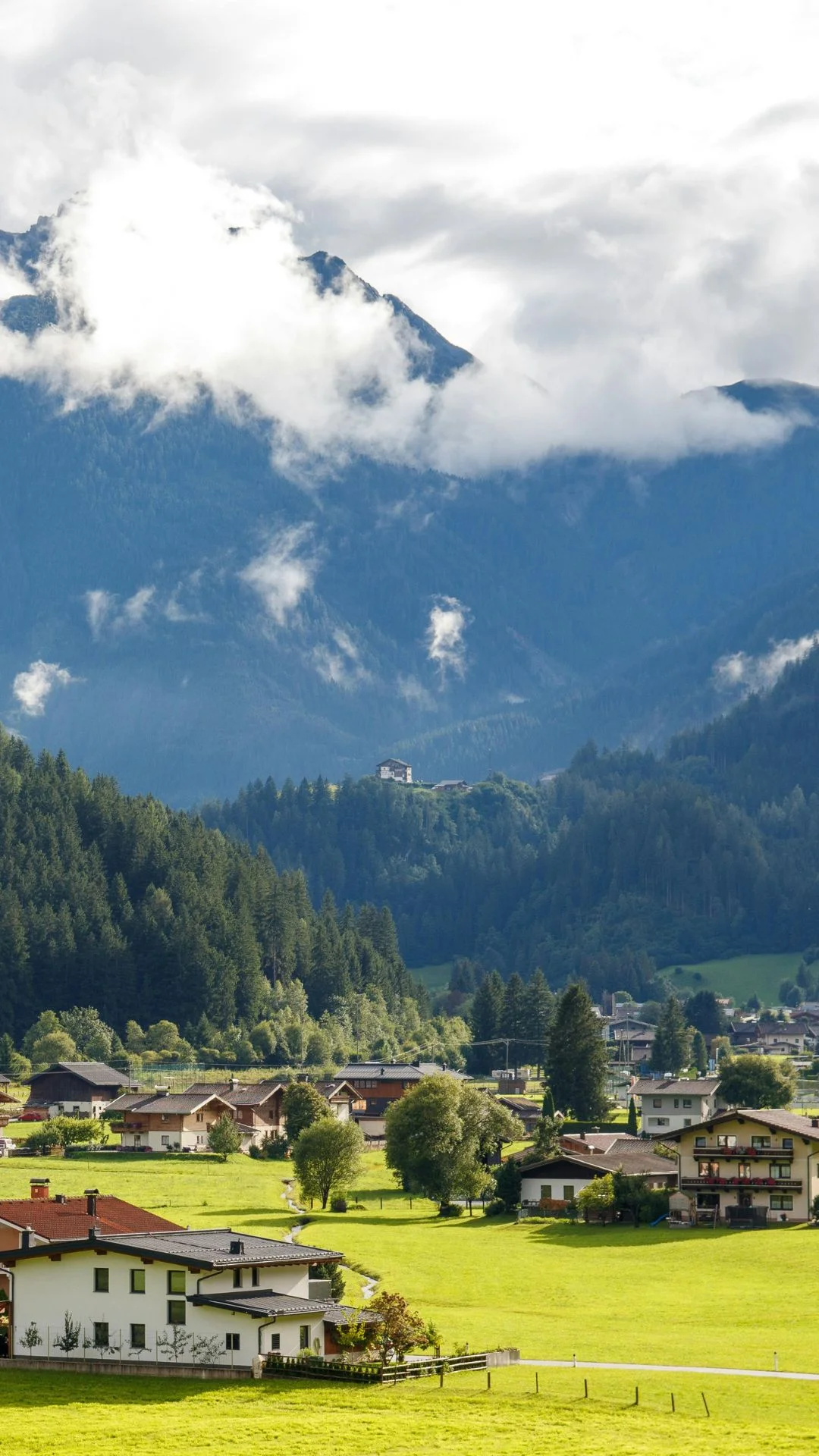 | 3. The Austrian Alps & Mountain AdventuresInnsbruck, Tyrol and the Zillertal Cable cars, panoramic mountain views, hiking trails and picturesque Alpine villages await. Places such as Innsbruck combine city sightseeing with easy access to the mountains. Best for: nature lovers, hiking and outdoor adventures. |
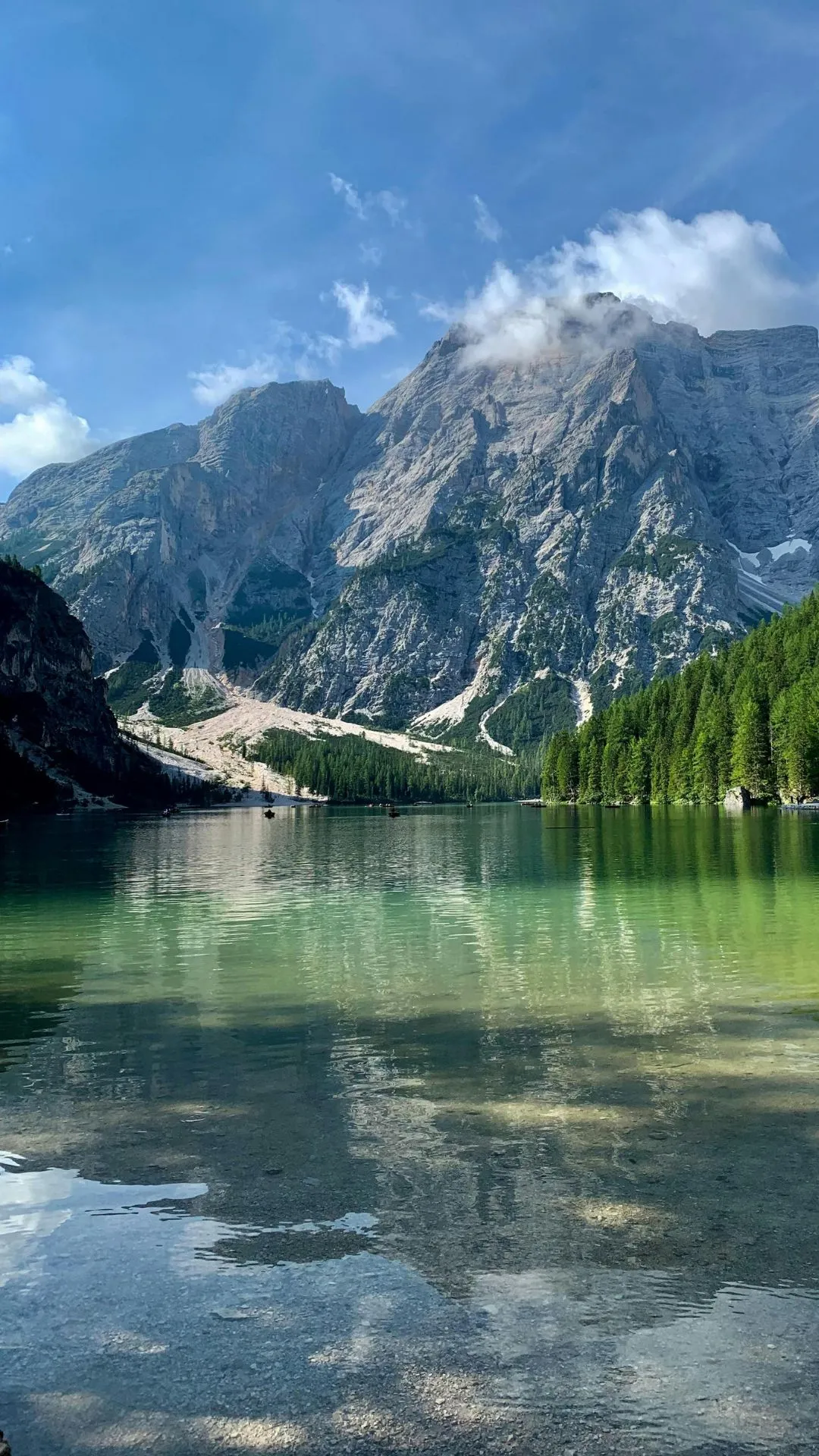 | 4. Lakeside Holidays & Mountain ResortsZell am See–Kaprun and Carinthia Spend summer days by the water, explore mountain trails or enjoy a resort holiday surrounded by spectacular scenery. Some destinations also offer glacier experiences and skiing in the colder months. Best for: families, couples and relaxed outdoor holidays. |
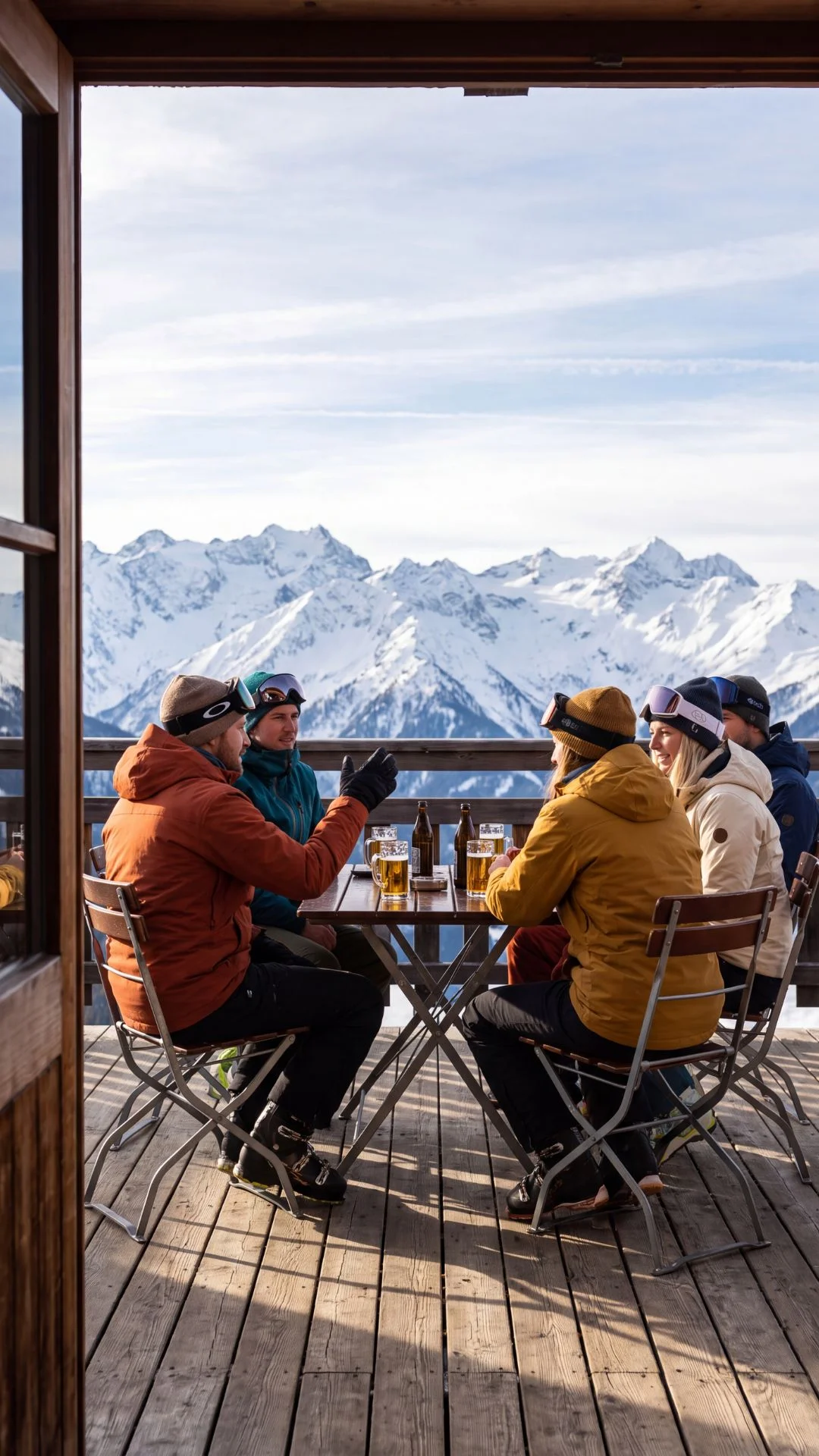 | 5. Ski Resorts & Winter EscapesKitzbühel, Sölden and St. Anton am Arlberg Austria is a fantastic choice for winter sports, with ski resorts ranging from lively mountain destinations to luxurious Alpine retreats. Many also welcome visitors for hiking and mountain activities in summer. Best for: skiing, snowboarding and winter holidays. |
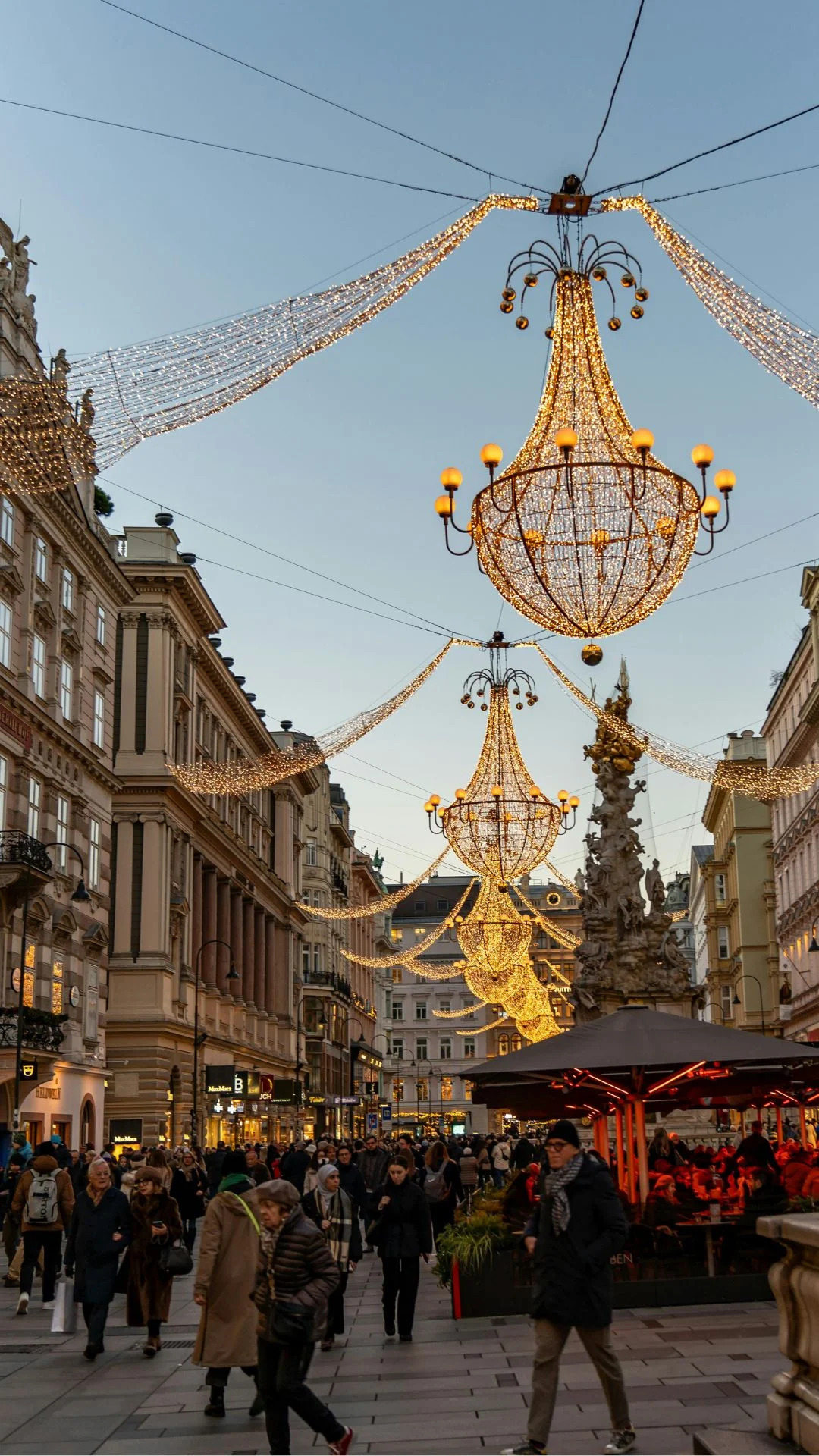 | 6. Christmas Markets & Festive TownsVienna, Salzburg and Innsbruck In winter, historic squares fill with festive lights, wooden market stalls, seasonal treats and beautiful decorations. Each city offers a different atmosphere, from grand urban markets to Alpine Christmas scenery. Best for: festive city breaks and Christmas market trips. |
The important thing to know before planning your trip
Austria's regions offer very different experiences, and they aren't all equally convenient to combine in one holiday. Vienna is in the east, while Innsbruck and Tyrol are in the west.
If you have just four or five days, it's usually better to focus on one area rather than spend precious holiday time travelling across the country. Your travel dates, preferred experiences and arrival airport will help determine the best route.
2. When Is the Best Time to Visit Austria?
Season | What to expect | Best for |
|---|---|---|
Spring · Mar–May | Blooming gardens, variable weather | City breaks and sightseeing |
Summer · Jun–Aug | Warm days, green mountains and lakes | Hiking, swimming and Alpine holidays |
Autumn · Sep–Nov | Cooler weather and changing colours | Scenic trips and city breaks |
Winter · Dec–Feb | Christmas markets and snow in Alpine areas | Skiing, festive trips and winter escapes |
Tip: Mountain weather and seasonal opening dates vary by location and altitude, so check your chosen destination before booking.
Austria is a year-round destination, but the experience can be completely different depending on when you visit. Summer is ideal for exploring Alpine lakes and hiking trails, winter brings skiing and Christmas markets, while spring and autumn are lovely for city breaks and quieter escapes.
The best time to visit depends on what you want to experience.
Spring (March–May)
Spring brings milder days, blooming gardens and fewer crowds in many cities. It's a lovely time to explore Vienna and Salzburg, although mountain weather can still be unpredictable, and some seasonal attractions may not yet be operating.
Best for: City breaks, sightseeing and spring gardens.
Summer (June–August)
Summer is ideal for Austria's lakes, mountain scenery, hiking and outdoor activities. It's also a popular holiday period, so expect more visitors and potentially higher accommodation prices in well-known destinations.
Best for: Alpine adventures, lakeside holidays, scenic drives and family trips.
Autumn (September–November)
Autumn brings colourful landscapes, cooler temperatures and a lovely atmosphere for exploring historic towns and countryside. Early autumn can be particularly appealing for hiking and scenic trips, although mountain conditions become less predictable as winter approaches.
Best for: City breaks, autumn scenery and countryside escapes.
Winter (December–February)
Winter transforms Austria into a destination for Christmas markets, snow-covered villages, skiing and cosy mountain retreats. Vienna and Salzburg are popular for festive city breaks, while Alpine resorts attract winter sports enthusiasts. Snow conditions vary by location and altitude.
Best for: Christmas markets, skiing, snowboarding and winter wellness holidays.
A quick tip before you book
Don't choose your travel dates based on Vienna's weather alone. If your dream trip involves Alpine lakes, mountain hiking or skiing, check the conditions and seasonal opening dates for your specific destination. Weather in the mountains can be very different from the weather in the cities.
3. How Many Days Do You Need in Austria?
Your trip | Where to go | Best for |
|---|---|---|
3 days | Vienna | Palaces, museums and city sightseeing |
4–5 days | Vienna + day trips | City culture and nearby excursions |
4–5 days | Salzburg + lakes or Innsbruck + Alps | Mountain scenery and nature |
7 days | Two carefully chosen regions | A mix of cities, lakes and mountains |
10+ days | Several Austrian regions | A more extensive trip at a relaxed pace |
Tip: Choose your favourite experiences first, then select the most practical route and airport.
Austria may look small on a map, but travelling between Vienna and the Alpine regions takes time. Rather than trying to see everything in one trip, I recommend choosing one area based on how many days you have and what you want to experience.
3 Days in Austria: Focus on Vienna
If you have just three days, Vienna is an excellent choice. You can explore the imperial palaces, historic centre, museums and traditional coffeehouses without spending too much time travelling between destinations.
Best for: First-time visitors, city breaks and culture lovers.
4–5 Days in Austria: Vienna and Nearby Excursions
With four or five days, you can explore Vienna more thoroughly and add a carefully chosen day trip. Depending on your interests, you could visit the Wachau Valley, Bratislava or another nearby destination. Hallstatt is possible as a long day trip, but it involves considerably more travel.
Best for: Travellers who want a mix of city sightseeing and excursions.
4–5 Days in Western Austria: Salzburg, Lakes and the Alps
If lakes, mountain scenery and Alpine villages are your priority, consider focusing on Salzburg and the surrounding region, or Innsbruck and Tyrol. You could also explore the Salzkammergut or spend time in an Alpine resort, depending on your arrival airport and chosen base.
Best for: Nature lovers, outdoor enthusiasts and travellers seeking Alpine scenery.
7 Days in Austria: Explore More Than One Region
With a week, you have more flexibility to combine destinations. You could visit Vienna and Salzburg with selected excursions, or concentrate on Salzburg, the lakes and Innsbruck. Choose your route carefully to avoid spending too much of your holiday on trains or in the car.
Best for: Travellers who want a varied Austrian holiday.
10 Days or More: A More Complete Austria Trip
With ten days or more, you can consider combining Vienna, Salzburg, the lake district and selected Alpine destinations. A road trip may offer flexibility in rural areas, while trains can work well between major cities.
Best for: Travellers who want to discover several regions at a comfortable pace.
My advice
Don't choose your itinerary simply by counting how many places you can fit in. Start with the experiences you want most, then choose a base and airport that minimise unnecessary travel. Austria is much more enjoyable when you have time to appreciate each destination.
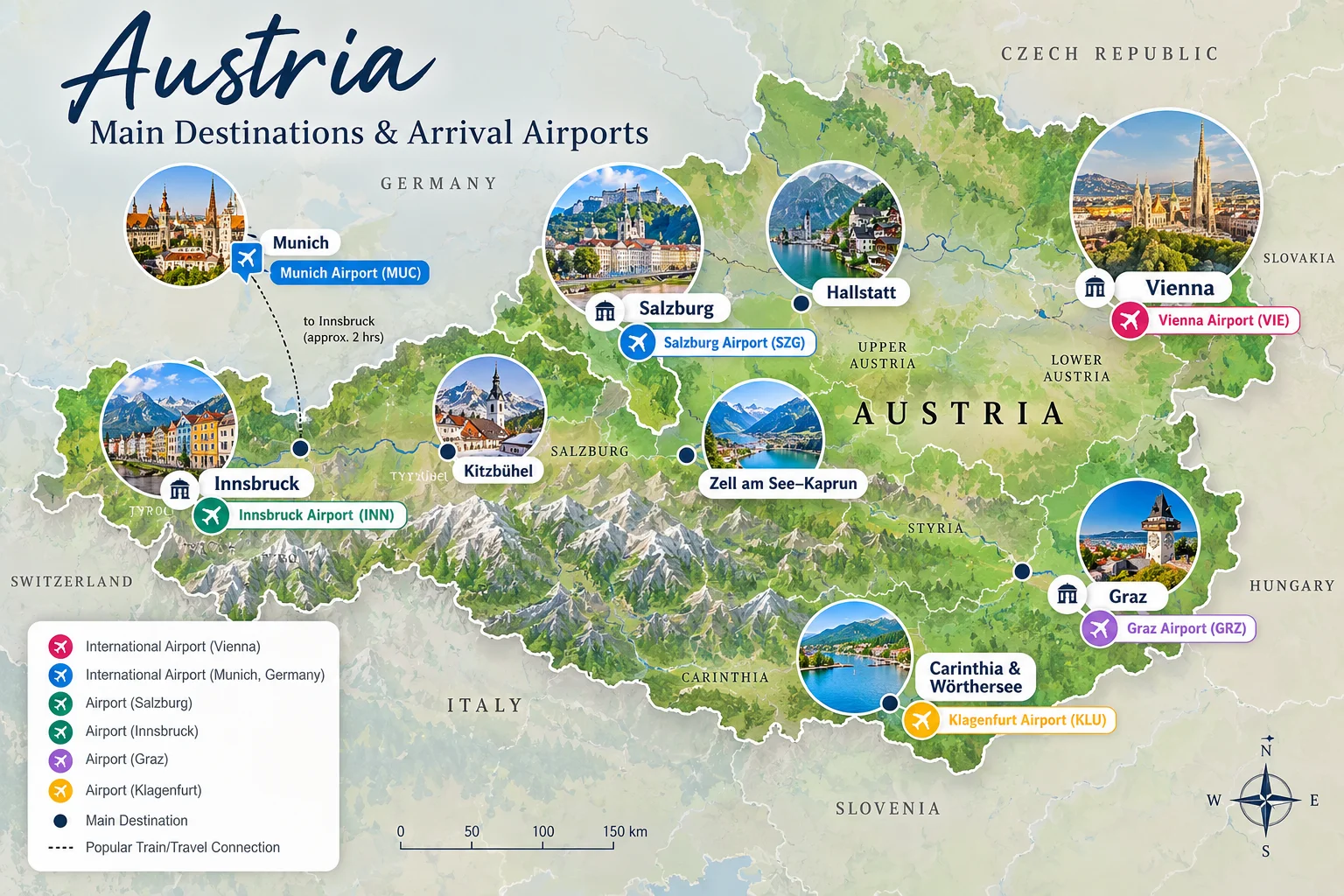
4. Which Airport Should You Fly Into for Austria?
When I first planned our trip to Austria, I booked flights to Vienna because it was the destination I knew. My biggest tip? Choose the places you want to visit first, then book your flights. The right airport can save you hours of travel and help you make the most of your holiday.
Airport | Best for |
|---|---|
Vienna (VIE) | Vienna, eastern Austria and trips combining the capital with selected day trips |
Salzburg (SZG) | Salzburg, the Salzkammergut, nearby lakes and many Alpine destinations |
Innsbruck (INN) | Innsbruck, Tyrol and western Austria's mountain resorts |
Munich (MUC), Germany | An alternative for Innsbruck, Tyrol and parts of western Austria |
Graz (GRZ) | Graz and the Styria region |
Klagenfurt (KLU) | Carinthia and its lakes |
Your best option will depend on flight prices, direct connections and how much time you have. Before booking, compare the total journey, including onward transport to your hotel.
Should You Fly to Vienna or Munich?
If you have only 3–5 days and want to explore Vienna, flying into Vienna is the obvious choice. You can enjoy the city without spending precious holiday time travelling across the country.
However, if your dream Austrian holiday involves Alpine scenery, mountain villages and outdoor adventures, consider flying into Salzburg or Innsbruck — or compare flights to Munich in Germany.
Munich can be a practical gateway to western Austria, particularly Tyrol and Innsbruck, with onward train connections available. Salzburg Airport may be more convenient for a holiday focused on Salzburg and the surrounding lake district.
Remember that Munich is not automatically the best option for every Alpine destination. Compare flight prices, transfers and total travel time before deciding.
My advice: decide what you want to see in Austria first. Your itinerary should determine your airport, not the other way around.
Route | By train/transfer (approx.) | Good to know |
|---|---|---|
Vienna Airport → Vienna centre | 15–25 min | CAT express or S7 |
Vienna → Salzburg | ~2.5 hrs | Direct Railjet |
Vienna → Graz | ~2.5 hrs | Direct trains |
Vienna → Innsbruck | ~4.5–5 hrs | Better to fly into Innsbruck or Munich for the Alps |
Vienna → Hallstatt | ~4 hrs | Train plus boat or bus; a very long day trip |
Salzburg → Hallstatt | ~2–2.5 hrs | Train or bus; a far easier day trip than from Vienna |
Salzburg → Zell am See | ~1–1.5 hrs | Direct trains |
Salzburg → Innsbruck | ~2 hrs | The route passes through Germany |
Munich → Salzburg | ~1.5 hrs | A real alternative gateway |
Munich → Innsbruck | ~2 hrs | Direct trains; allow more from Munich Airport |
Tip: Hallstatt is much closer to Salzburg than to Vienna, so base yourself in Salzburg for the lakes.
5. How Much Does a Trip to Austria Cost?
In my experience, Austria is not the cheapest European destination, and accommodation is where I would expect your budget to feel the biggest strain. Hotel prices can be high, especially in popular destinations such as Salzburg, Hallstatt and the Austrian Alps, or during summer and the Christmas market season.
Food is more manageable. I would describe dining costs as broadly in line with many other established Western European destinations, although restaurants in tourist hotspots can be pricier. Bakeries, cafés and casual restaurants can help keep daily spending under control.
Transport is where planning ahead can pay off. Austria has an extensive rail network, and trains can be a cost-effective way to travel between major destinations if you book an advance fare early. ÖBB's Sparschiene tickets have limited availability and specific travel conditions, so compare fares before your travel dates and check the restrictions. Check train fares with Omio
My tips for managing your Austria travel budget
Book hotels early, particularly if you're visiting in summer, around Christmas or staying in a popular lakeside or mountain destination.
Compare different arrival airports before booking. A cheaper flight may not save you money once you include the transfer to your destination.
Check train fares as soon as your plans are firm, especially for longer journeys between cities.
Be selective with mountain activities. Cable cars, boat trips, guided excursions and attraction tickets can add considerably to the total cost.
6. Where to Stay in Austria
Destination | Category | Hotel | Why stay here? |
|---|---|---|---|
Vienna | Luxury | Iconic luxury opposite the State Opera | |
Mid-range | Boutique stay near the Naschmarkt | ||
Budget-friendly | Practical base near the main railway station | ||
Salzburg | Luxury | Luxury retreat with spa and panoramic city views | |
Mid-range | Boutique hotel in the historic Old Town | ||
Budget-friendly | Central location for exploring Salzburg | ||
Hallstatt & Salzkammergut | Luxury | 5-minute walk from the Museum Hallstatt with stunning mountain views | |
Mid-range | Just a short distance north of Hallstatt | ||
Budget-friendly | Explore the surrounding lakes and mountains while securing outstanding value and hospitality | ||
Innsbruck & Tyrol | Luxury | Alpine wellness retreat in Seefeld | |
Mid-range | Central hotel with wellness facilities | ||
Budget-friendly | Located in the Hötting district, about 0.9 miles from the Golden Roof, it provides a great value alternative to the premium-priced Old Town | ||
Zell am See & the Austrian Alps | Luxury | Luxury nature and wellness retreat in Leogang | |
Mid-range | Central Zell am See hotel with wellness facilities | ||
Budget-friendly | Located in a quiet neighborhood just a short distance from the center of Zell am See, this family-run guesthouse offers exceptional value |
My advice is to plan your accommodation and main transport first. Once those costs are covered, it becomes much easier to work out how much you can spend on food and experiences.
7. Best Places to Visit in Austria
Austria is a country where you can spend one trip exploring imperial palaces and elegant cities, and another discovering mountain villages, turquoise lakes and spectacular Alpine scenery. The key is choosing the regions that match your interests rather than trying to see everything at once.
Here are the destinations I would consider for a first trip to Austria.
Vienna: Imperial Architecture and Coffeehouse Culture
Vienna is an excellent starting point for first-time visitors. The Austrian capital combines grand palaces, historic cafés, world-class museums and beautiful architecture with a lively modern city.
Highlights include Schönbrunn Palace, St Stephen’s Cathedral, the Hofburg and the Belvedere. Allow at least three days if you want to explore the main sights without rushing.
Best for: Culture, architecture, museums, food and Christmas markets.

Salzburg: A Fairytale Old Town
Salzburg is smaller than Vienna but full of character. Its Baroque streets, historic squares and mountain backdrop make it one of Austria’s most picturesque cities.
Explore the Old Town, visit Hohensalzburg Fortress, stroll through Mirabell Gardens and discover the city's musical heritage. Salzburg is also a convenient base for exploring nearby lakes and mountain scenery.
Best for: Romantic city breaks, history, music and day trips into the surrounding countryside.
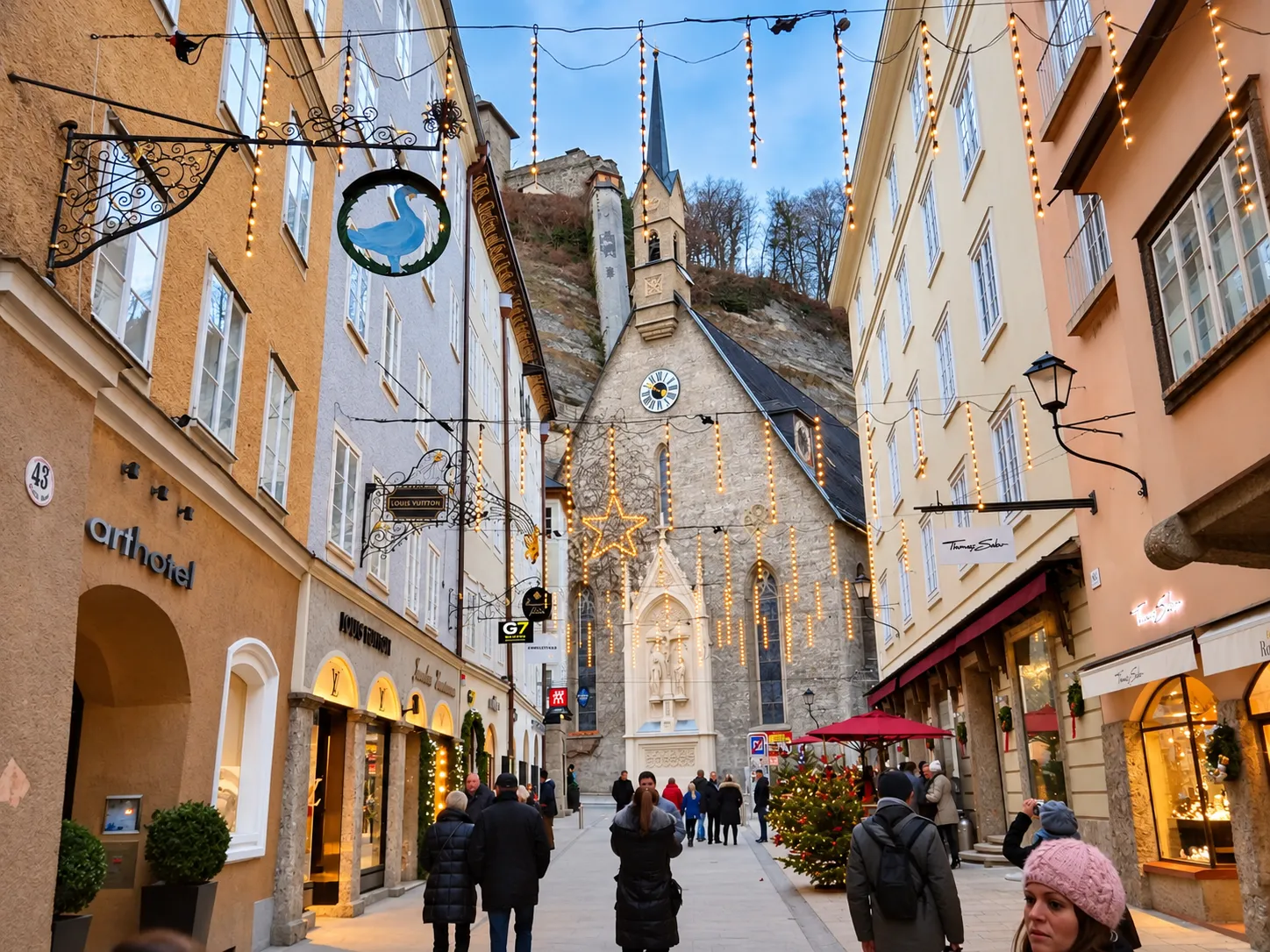
Hallstatt and the Salzkammergut: Lakeside Scenery
The Salzkammergut lake district is one of Austria’s most recognisable landscapes, with clear lakes, forested mountains and traditional villages. Hallstatt is the best-known stop, but it is only one part of the region.
If you have time, consider exploring other lakeside destinations too, such as Wolfgangsee. Staying overnight in the region can give you more time to enjoy the scenery beyond the busiest day-trip hours.
Best for: Photography, scenic villages, lakes and nature.
Innsbruck and Tyrol: The Austrian Alps
Innsbruck combines a historic city centre with dramatic mountain scenery. You can explore its old streets and landmarks before heading into the surrounding mountains for hiking, panoramic views or winter sports.
The wider Tyrol region is home to traditional Alpine villages and major mountain resorts, making it particularly appealing for travellers who want to spend more time outdoors.
Best for: Mountain scenery, hiking, skiing and active holidays.
Zell am See–Kaprun: A Lake, Mountains and a Glacier
For a destination that combines lakeside views with high mountain scenery, Zell am See–Kaprun is worth considering. In warmer months, visitors can enjoy the lake and hiking trails; in winter, the region becomes a base for snow sports. The nearby Kitzsteinhorn glacier adds another dimension to the landscape.
Best for: Nature, outdoor activities, mountain views and longer Alpine stays.
Graz: A Different Side of Austria
Graz is a great option if you want to explore beyond the best-known destinations. Its historic centre, lively food scene and contemporary architecture give it a different atmosphere from Vienna and Salzburg.
It can work well as a city break in its own right or as part of a trip through the Styria region.
Best for: Architecture, food, culture and a less obvious city destination.


Which destinations should you choose?
For a first visit, I would focus on one or two regions based on your available time. Vienna is ideal for a city-focused trip, while Salzburg and the surrounding lake district offer a combination of culture and scenery. If mountains are your priority, consider Innsbruck and Tyrol or Zell am See–Kaprun instead.
8. Suggested Austria Itineraries
Duration | Recommended itinerary | Best for |
|---|---|---|
3 days | Vienna | Palaces, museums, architecture and coffeehouse culture |
4 days | Vienna, Hallstatt and Graz | Exploring more of Austria in a short trip |
5 days | Vienna + a day trip | City sightseeing with a little extra variety |
5 days | Salzburg + the lake district | Historic streets, lakes and Alpine scenery |
7 days | Vienna + Salzburg + the surrounding lakes | A mix of Austrian cities and nature |
10+ days | Vienna, Salzburg, the lakes and an Alpine region | A more extensive trip across Austria |
My 4-Day Austria Itinerary
If you're an explorer like me and want to make the most of your trip, check out my 4 Days in Austria Itinerary, where I explored Vienna, Hallstatt and Graz.
My tip: Choose your destinations first, then compare airports and transport connections. With only a few days, it's usually better to focus on one region or plan your route carefully to avoid spending too much time travelling.
Austria has so much more to offer than you might expect, from elegant cities and fairytale villages to crystal-clear lakes and spectacular Alpine landscapes. Whether you're planning a short city break or a longer adventure, the secret is to choose the destinations that suit your travel style and plan your route wisely.
Frequently Asked Questions About Visiting Austria
Is Austria expensive to visit?
Austria is mid-to-high priced for Europe, and accommodation is the biggest cost, especially in Salzburg, Hallstatt and ski resorts. Food is more manageable, and advance train fares help.
How many days do you need in Austria?
Three days is enough for a Vienna city break, while four to seven days allows you to explore more than one destination. If you want to combine major cities with lakes and mountain regions, allow at least a week if possible.
Which airport should I fly into for Austria?
Vienna Airport is a practical choice for exploring Vienna and eastern Austria. Salzburg and Innsbruck airports are worth considering for western Austria and the Alps. Munich Airport in Germany can also be an alternative for some western Austrian destinations. Choose your itinerary before booking flights.
Can you travel around Austria without a car?
Yes. Trains connect major cities such as Vienna, Salzburg, Innsbruck and Graz. However, a rental car can offer more flexibility when exploring smaller villages, lakes and mountain areas where public transport connections may be limited.
What is the best month to visit Austria?
It depends on your plans. June to September is popular for hiking, lakes and outdoor activities, while December is ideal for Christmas markets and winter scenery. Spring and autumn can be good for city breaks, although Alpine weather varies considerably.
Is Hallstatt worth visiting?
Yes, especially if you enjoy picturesque villages and lakeside scenery. However, Hallstatt is very popular, so consider visiting early in the day or staying overnight in the surrounding region to experience a quieter atmosphere.
Can you visit Vienna, Salzburg and Hallstatt in four days?
Yes, with careful planning, but it will be a busy trip with limited time in each place. You can see how I approached a multi-destination visit in my 4 Days in Austria Itinerary, which includes Vienna, Hallstatt and Graz.
Some of the links in this article are affiliate links. Using one costs you nothing extra, and we earn a small commission that helps keep this site running. If anything here saved you time or money, booking through our links is the easiest way to say thanks.